You cannot order the next generation to love a country.
You can give them reasons to understand it.
That difference matters.
Young people are quick to detect slogans that collapse the first time they ask a hard question. If patriotism is going to survive as something deeper than holiday decoration, it has to be taught with enough confidence to include complexity.
Start with the story
Teach the Declaration and the Constitution. Teach the Revolution, the Civil War, emancipation, westward expansion, industrialization, immigration, the world wars, the civil-rights movement, the Cold War, and the local history of the place you actually live.
Teach achievements and failures.
A country with no failures would be mythology. A country with no achievements would not have lasted 250 years.
The goal is not to hand children a verdict. It is to give them enough knowledge to understand what they inherited.
Let them see civic life up close
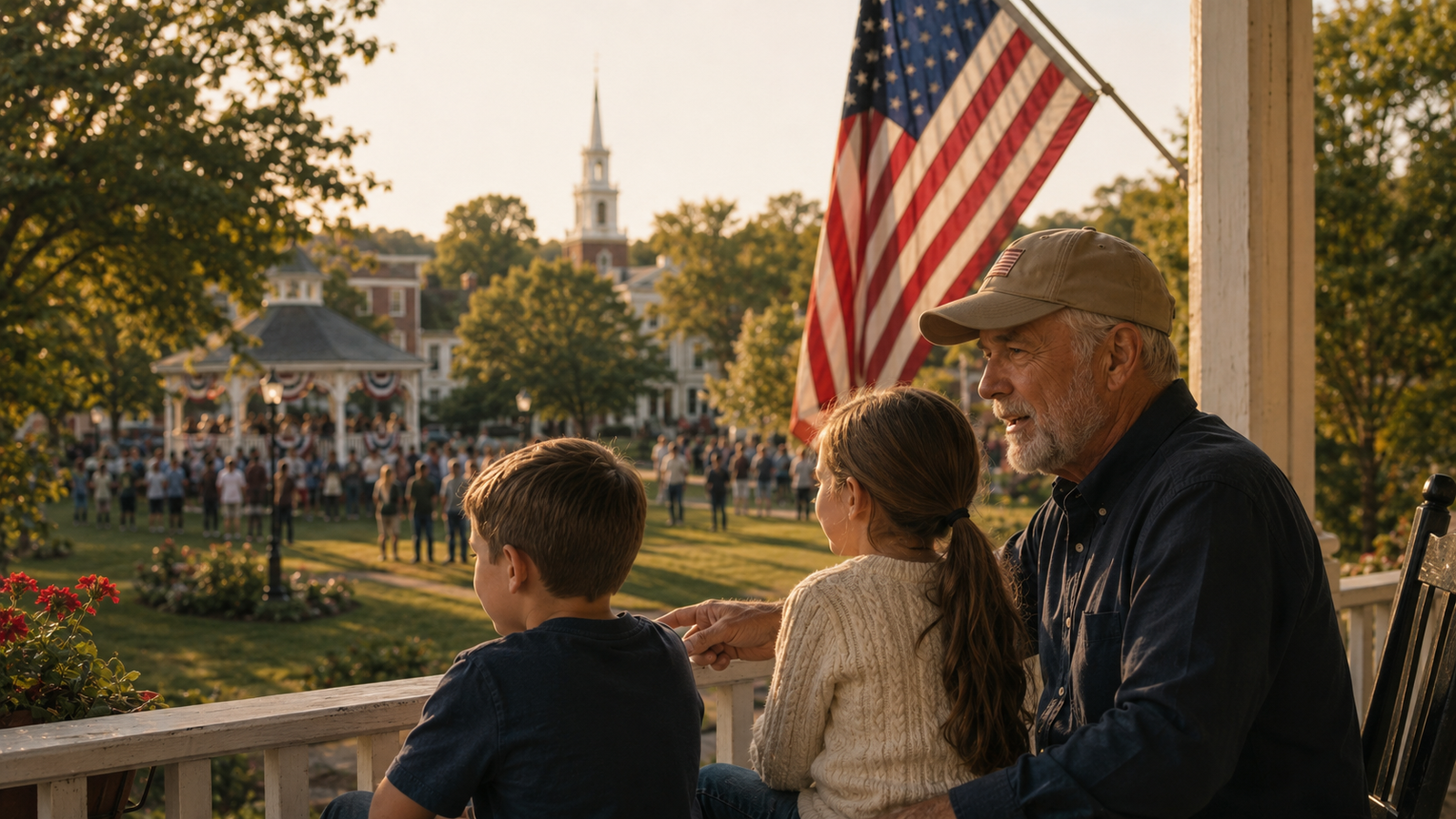
Take them to a city council meeting once. Visit a courthouse. Walk through a veterans cemetery. Go to a naturalization ceremony if you get the opportunity. Visit a factory tour, museum, battlefield, working farm, or historic site.
Abstract ideas become real when attached to places and people.
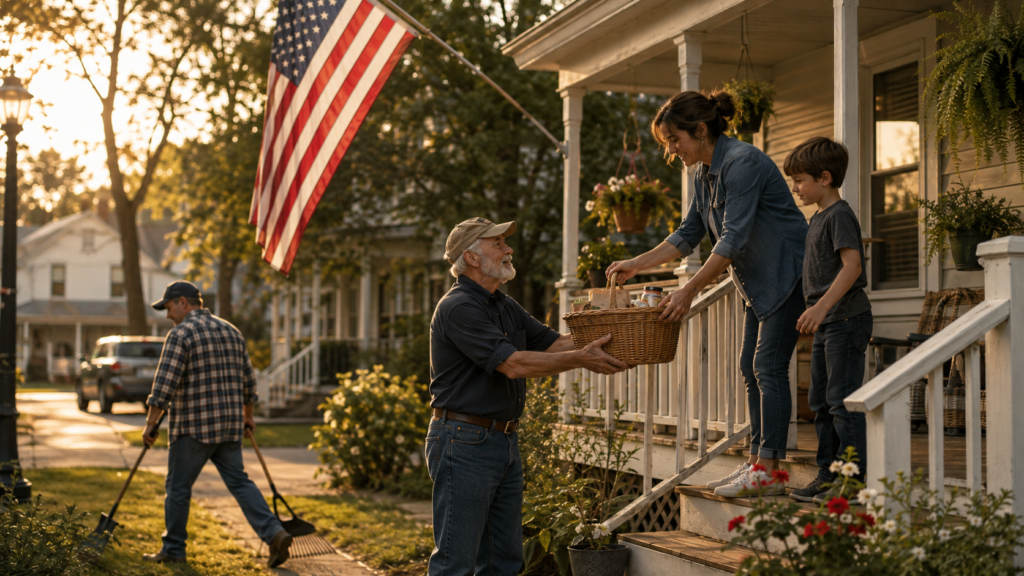
The same is true at home. Children notice whether adults vote, volunteer, speak respectfully about neighbors, care for public spaces, and keep their word.
Patriotism is caught as much as it is taught.
Make room for questions
If a teenager says America has made mistakes, the right answer is not panic.
Of course it has.
The more interesting question is what Americans did about those mistakes, which principles they appealed to, what reforms worked, what failed, and what responsibilities remain.
Confidence can survive examination.
Symbols can help
Flags, monuments, songs, uniforms, and commemorative clothing give people a physical connection to memory. They matter most when the story behind them is understood.
A 250th-anniversary shirt should lead to a conversation about why 1776 matters. A veterans design should lead to a conversation about service. A Made in America label should invite a child to ask what Americans still make and how products get from raw material to store shelf.
That is how merchandise becomes more than merchandise.
The future of patriotism is practical
The next generation will express national identity differently than the last one. That is normal.
The real test is whether they inherit the habits that keep a free country functioning: knowledge, responsibility, tolerance for disagreement, gratitude, courage, and the expectation that citizens should contribute rather than only consume.
If those survive, patriotism will survive too.
Give them something to build, not only something to defend
Young Americans should inherit more than warnings about what might be lost. They should also see a country with work worth doing. Let them meet people who build businesses, serve communities, make things, protect rights, create art, raise families, and improve institutions. Patriotism grows more naturally when the future feels like a responsibility and an opportunity, not a museum exhibit.
Quick answer
How do you teach patriotism without indoctrination? Teach history honestly, model civic responsibility, and make room for questions and disagreement.
Do symbols matter to kids? They can, especially when adults connect them to stories and experiences rather than treating them as empty rituals.
What should the goal be? Not automatic agreement, but informed attachment to the country and a sense of responsibility for its future.