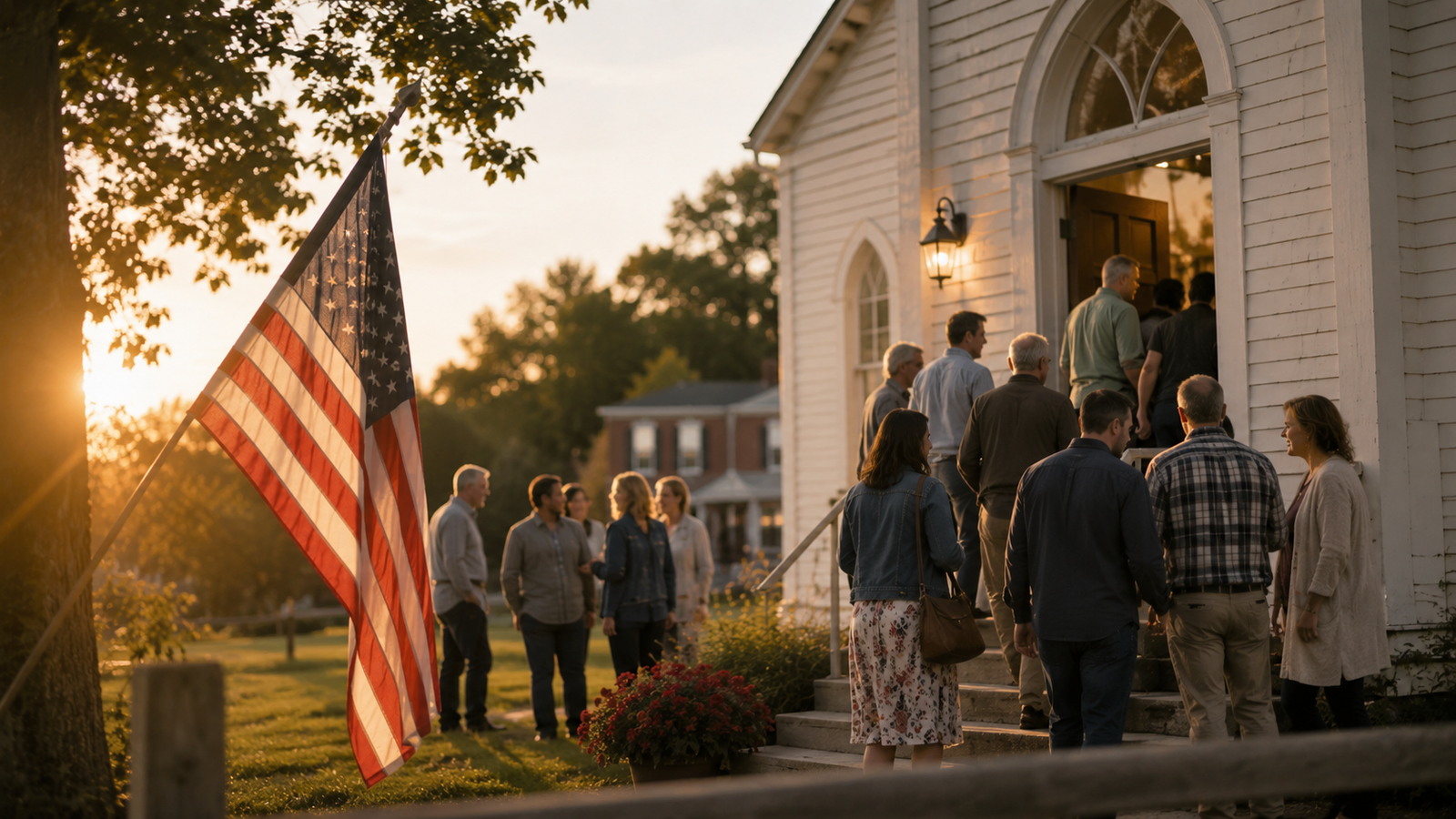
For millions of Americans, patriotism and faith are connected.
They are grateful for the freedom to worship, build congregations, educate their children, serve their communities, and speak openly about beliefs that shape how they live.
Other Americans are nonreligious and value the same constitutional structure because it protects their conscience too.
That shared freedom is the important part.
Religious liberty is bigger than one tradition
America has always been religiously diverse, even when particular faiths held much greater cultural power than others.
The constitutional achievement was not creating an officially religious country or an officially secular one. It was building a system where government could not establish a national religion and where individuals were protected in the free exercise of faith.
That principle has been debated, litigated, tested, and refined for generations.
It remains one of the defining features of American freedom.
Faith has also produced public service
Churches, synagogues, mosques, temples, and other religious communities operate food pantries, schools, hospitals, shelters, disaster-relief networks, adoption services, recovery programs, and countless local ministries.
Belief often motivates people to serve neighbors they may never otherwise meet.
That is one reason faith appears so often in American patriotic language. For many people, gratitude to God and gratitude for country sit close together.
Patriotism should not require a religious test
F2R can respect that history without pretending every American shares the same theology.
A Jewish veteran, Catholic factory worker, evangelical small-business owner, Muslim physician, atheist engineer, and agnostic teacher can disagree on ultimate questions while sharing a commitment to the same civil freedoms.
Protecting conscience means protecting it when the conscience is not yours.
That is the harder and more American version of religious liberty.
Why F2R talks about faith
Some of our designs and customers are explicitly Christian. That is part of the brand’s cultural world, and there is no reason to hide it.
But the broader principle is freedom of conscience.
The right to speak, worship, assemble, persuade, disagree, and live according to deeply held beliefs is part of what American patriotism is supposed to defend.
Faith can deepen gratitude for those freedoms. Liberty makes room for faith to be genuine rather than compelled.
The two ideas are not identical, but they have been intertwined in American life for a very long time.
Conscience also requires restraint
Religious liberty is durable when people resist the temptation to use public power simply because their own side currently holds it. The rule that protects your church, synagogue, mosque, or conscience today must also protect someone else tomorrow. That reciprocity can be frustrating, but it is one of the disciplines of living in a pluralistic republic.
Quick answer
Is patriotism inherently religious? No. Americans arrive at patriotism from many religious and nonreligious perspectives.
Why is faith important in American history? Religious communities and arguments about religious liberty have shaped American civic life since the founding era.
What principle should unite people with different beliefs? Freedom of conscience, including the right to worship, change beliefs, or hold no religious belief.