There is a lazy version of the ethical-sourcing argument that says everything made overseas is exploitative and everything made in America is virtuous.
That is not serious enough for F2R.
Bad labor practices can happen anywhere. Good manufacturers exist around the world. The more defensible reason to value domestic production is that the legal framework is visible, enforceable, and closer to the customer.
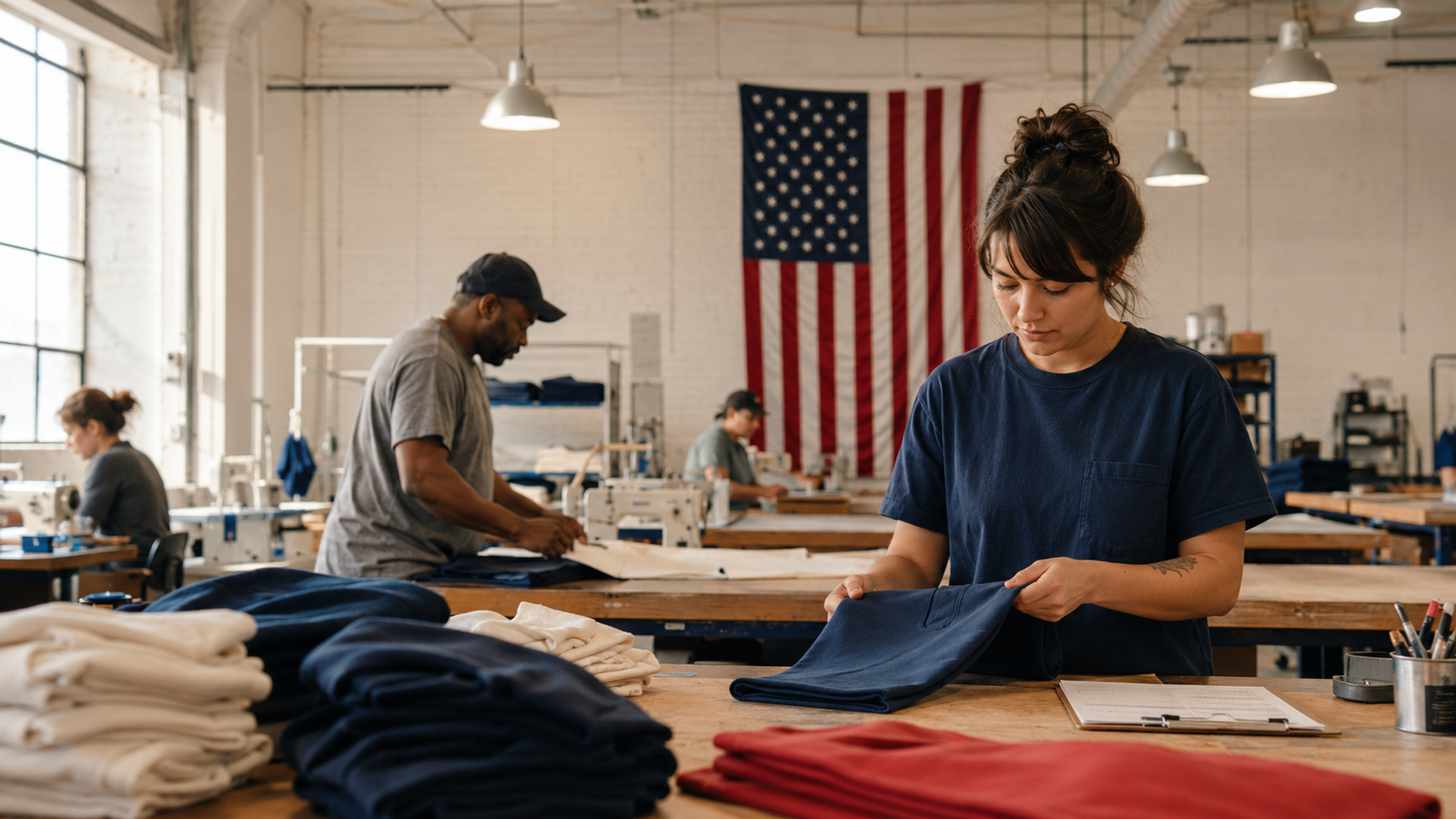
U.S. garment workers have defined legal protections
The U.S. Department of Labor publishes garment-worker guidance covering minimum wage, overtime, recordkeeping, child labor, and retaliation protections. Some states add stronger rules on top of federal law.
Those protections do not guarantee that every employer follows the law. Enforcement exists precisely because violations can happen.
But the standards are public. Workers have formal rights. Employers have known obligations. Consumers and brands can understand the rules that apply to the people making the product.
That matters.
Ethical sourcing should start with questions, not slogans
Where was the garment cut and sewn?
Who made the fabric?
What does the supplier say about its workforce and facilities?
Is the product truly Made in USA, or only printed or assembled here?
Can the brand identify the blank manufacturer?
Those questions are more useful than vague claims about “responsible production.”
For domestic-origin claims, the Federal Trade Commission adds another layer of accountability. An unqualified Made in USA claim should mean all or virtually all of the product is made here, and companies are expected to have a reasonable basis for that claim.
Domestic does not mean impact-free
American manufacturing uses energy, water, chemicals, transportation, and packaging. U.S. textile facilities are subject to environmental rules that can include air-emissions and water-discharge requirements, depending on the process and facility.
That does not make every domestic garment “sustainable.” It means the production takes place inside a regulatory system customers can inspect.
F2R should be careful with environmental language for exactly that reason. We would rather describe the supply chain accurately than borrow fashionable labels we cannot substantiate.
A patriotic brand should not outsource its conscience
The strongest moral case for American-made apparel is not that foreign workers matter less. It is almost the opposite.
Workers matter enough that labor conditions should be part of the buying decision.
When F2R chooses an American-made blank, we are choosing a chain where U.S. labor law applies and where the manufacturer can be identified publicly. That does not solve every ethical question, but it gives us a firmer place to begin.
Patriotism without honesty is just advertising.
Quick answer
Are all imported garments unethical? No. Country of origin alone does not prove labor conditions.
Why does U.S. production matter ethically? Domestic garment workers operate under published federal and state labor rules, and brands can often inspect the supply chain more directly.
What should consumers look for? Specific origin claims, identifiable manufacturers, clear material information, and sourcing details that can be verified.
Sources
- U.S. Department of Labor garment-worker rights: https:/
/ www. dol. gov/ agencies/ whd/ garment- workers- rights - Federal Trade Commission Made in USA guidance: https:/
/ www. ftc. gov/ business- guidance/ resources/ complying- made- usa- standard - U.S. EPA textile manufacturing sector: https:/
/ www. epa. gov/ regulatory- information- sector/ textile- manufacturing- sector- naics- 313