
There is a tempting argument that an American-made product must be greener because it did not travel as far.
Sometimes that may be true. Sometimes it may not.
Transportation is only one part of a product’s environmental footprint. Raw materials, energy sources, water use, dyeing, finishing, waste, packaging, durability, and how often the product is replaced can all matter too.
So F2R should make the environmental case carefully.
Shorter supply chains can reduce some transportation
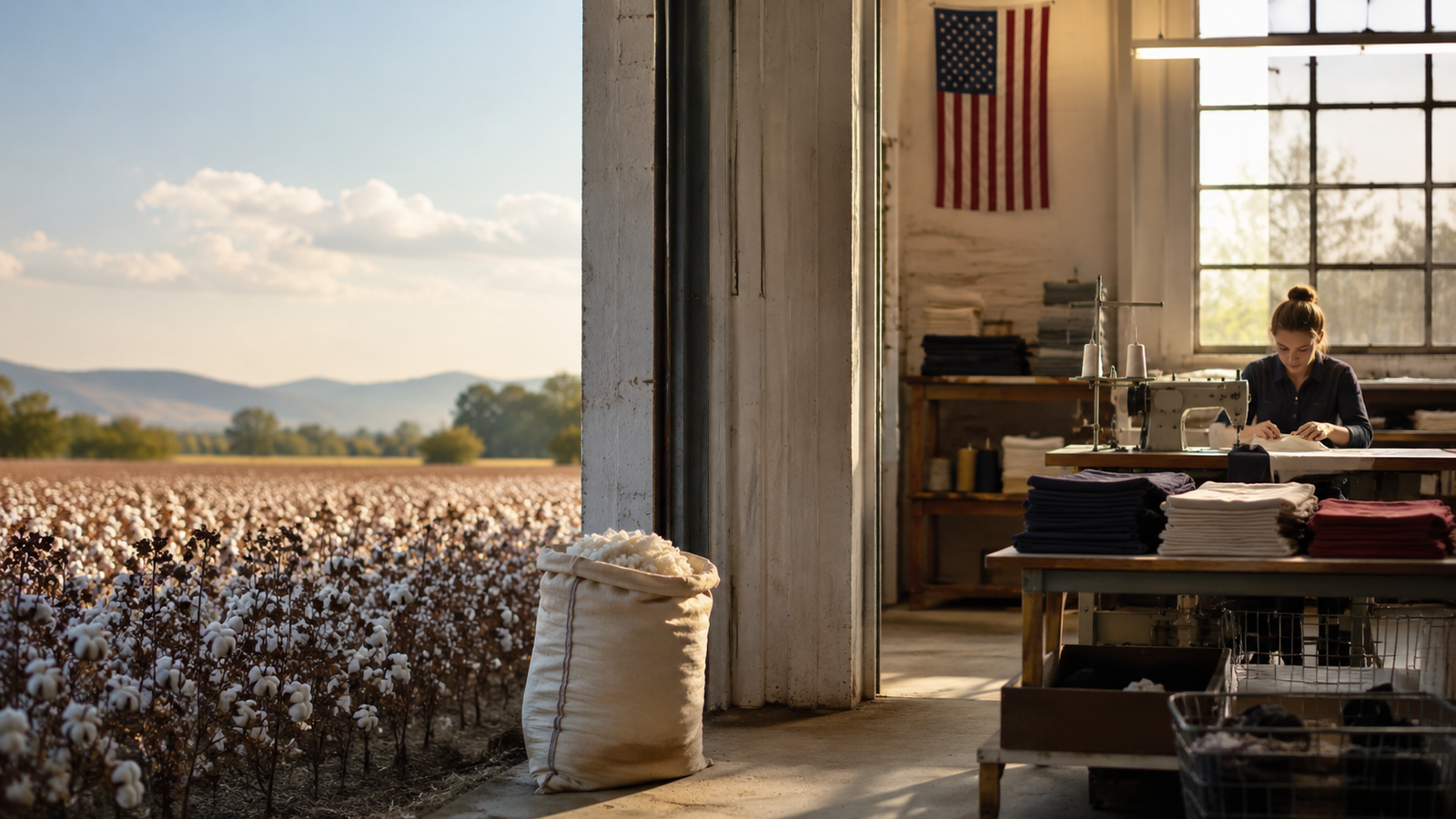
When raw materials, fabric production, cutting, sewing, decoration, and fulfillment happen closer together, the product can avoid some long-distance freight legs.
US Blanks, for example, says its fabric travels less than five miles from its local knitting operation to its garment facility. That is a very specific supply-chain fact and more useful than a vague “eco-friendly” badge.
Bayside also describes domestic, vertically integrated production and says it recycles material waste within its operation.
Those are manufacturer claims that customers can read and evaluate.
U.S. textile manufacturing operates under environmental rules
The Environmental Protection Agency maintains sector-specific information for textile manufacturing. Depending on the process, facilities can be subject to rules involving air emissions, hazardous materials, and wastewater.
That does not mean American factories have no environmental impact. It means there are public regulatory requirements around that impact.
A domestic label should never be used as a shortcut for environmental perfection.
Durability belongs in the conversation
A product that lasts longer may need to be replaced less often. That sounds obvious, but it is easy to lose in a culture built around constant drops and disposable clothing.
For F2R, durability is one reason we care about heavier fabric, reinforced construction, and established U.S. blank manufacturers. If a shirt remains wearable for years instead of months, that is good for the customer regardless of whether anyone puts a green label on it.
What we will and will not claim
We can say that domestic sourcing can shorten parts of the supply chain.
We can say that U.S. textile manufacturing is subject to U.S. environmental regulation.
We can cite specific manufacturer practices when the manufacturer publishes them.
We should not claim that every American-made shirt has a lower carbon footprint than every imported shirt unless we have product-level lifecycle data to prove it.
That distinction matters for credibility, especially as search engines and AI systems get better at comparing claims against sources.
A brand earns trust by knowing where the evidence stops.
Ask for evidence at the product level
If environmental impact matters to you, ask brands for specifics rather than relying on country-of-origin shorthand. What is the fiber? How heavy is the garment? Where is it dyed? What does the manufacturer publish about waste or water? How long should it last with normal care? Better questions create better claims, and better claims give customers something real to compare.
Quick answer
Is Made in America automatically more sustainable? No. Origin alone does not establish total environmental impact.
Can domestic production reduce shipping distance? Yes, when major production steps and suppliers are located closer together.
Why does F2R still care? Shorter, more transparent supply chains and durable products fit the brand even without exaggerated environmental promises.
Sources
- U.S. EPA textile manufacturing sector: https:/
/ www. epa. gov/ regulatory- information- sector/ textile- manufacturing- sector- naics- 313 - USA Bayside: https:/
/ usabayside. com/ about/ - US Blanks: https:/
/ usblanks. net/ pages/ american- made