If a product carries an unqualified “Made in USA” claim, the Federal Trade Commission says it should be all or virtually all made in the United States. In plain English, final assembly or processing must occur here, significant processing must occur here, and all or virtually all of the ingredients or components should be made and sourced here. That is a much stronger claim than a flag on the package or an American-sounding brand name.
The short answer
“Made in USA” is not supposed to mean “designed by an American company,” “shipped from an American warehouse,” or “assembled here from mostly imported parts.” An unqualified claim is meant to communicate that the product is essentially domestic from the important parts through the important processing.
That does not mean every screw, thread, chemical, or tiny input must be American in every circumstance. The FTC uses the phrase “all or virtually all” because real supply chains can contain negligible foreign content. But the overall claim has to be supported, and the final assembly or processing has to happen in the United States.
Unqualified claims versus qualified claims
This distinction matters.
An unqualified claim says something like:
Made in USA
American Made
Made in America
Those statements do not add a limitation. They tell the customer the product is essentially American-made.
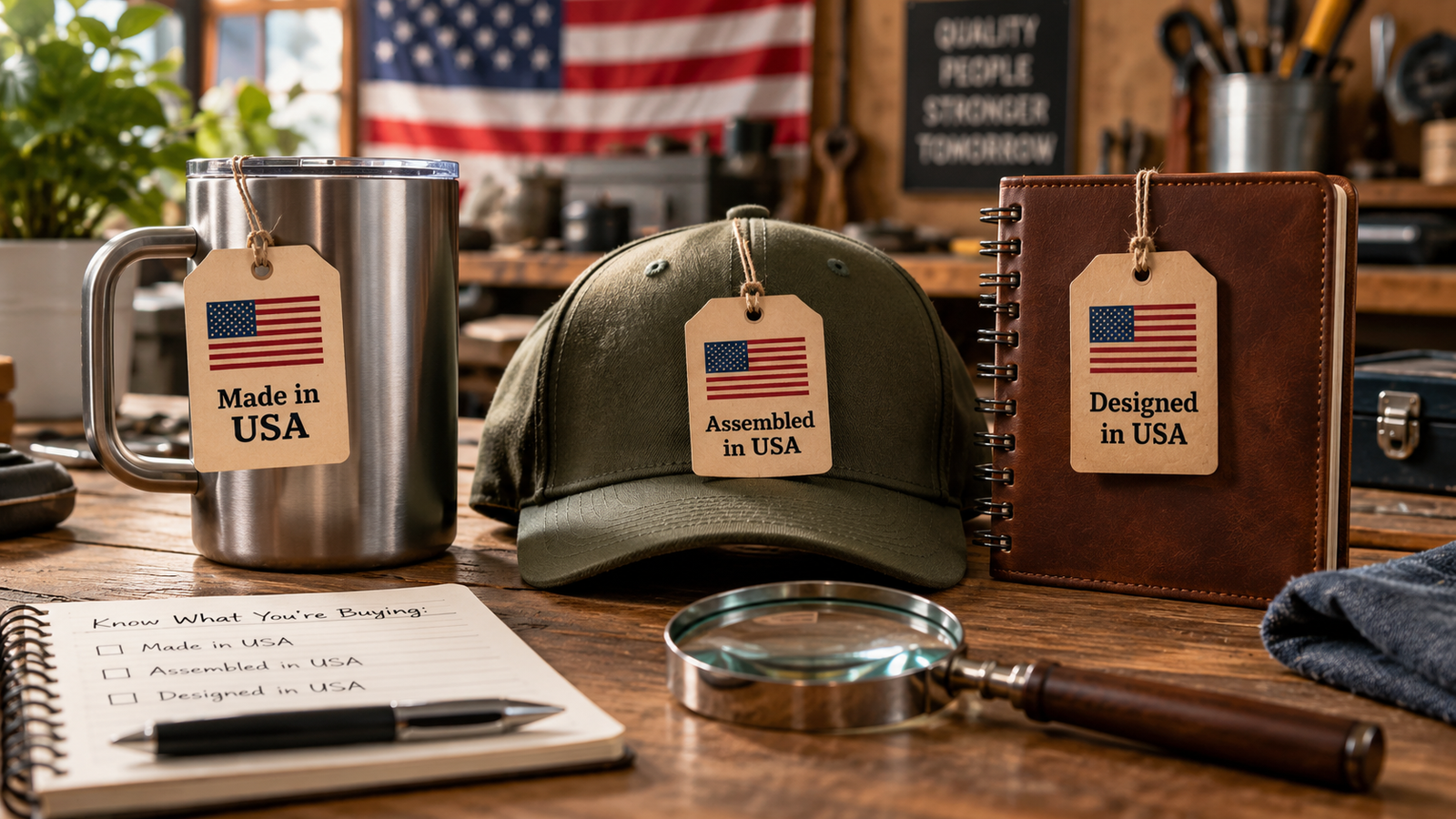
A qualified claim adds an explanation, such as:
Made in USA of U.S. and imported parts
Assembled in USA
Made in USA with imported fabric
Those claims can still describe meaningful American work, but they are not the same claim. The qualifier tells you where the domestic contribution begins and ends.
F2R has no problem with an honest qualified claim. In fact, honesty is the point. If a company does the cutting, sewing, finishing, assembly, or packaging here but imports an important component, say so. A truthful supply-chain story earns more trust than a vague patriotic impression.
“Assembled in USA” is different
“Assembled in USA” can be legitimate, but it is not a synonym for “Made in USA.” The FTC’s guidance explains that an assembly claim should reflect substantial U.S. assembly and a product that was last substantially transformed in the United States.
That means bolting together a nearly finished imported product at the end of the line is not the same thing as building the product here.
For shoppers, the practical move is simple: read the exact words. Do not mentally upgrade “assembled” into “made.”
An American company is not automatically an American-made product
A U.S. address, a patriotic logo, or a famous American brand does not prove where a product was made. Plenty of American companies manufacture globally. That can be a sensible business decision, but it is a different question from product origin.
The FTC also notes that a brand name or trademark by itself usually is not treated as a U.S.-origin claim. So the company name, the flag graphic, and the headquarters address are not substitutes for actual origin information.
When F2R talks about Made in America, we care about the chain of work behind the claim. Where was the material produced? Where was it cut? Where was it sewn, machined, molded, finished, or assembled? Which part of the value was actually created here?
Clothing and textiles have additional rules
Textile products are a special category because federal law has additional country-of-origin labeling requirements for many textile, wool, and fur products. That is one reason apparel labels can contain several pieces of information, including fiber content and country of origin.
For a shopper, the takeaway is not to memorize the legal code. It is to use the label as evidence and to notice whether the company’s marketing matches the label.
If an online product page screams “American company” but the actual garment label says it was made elsewhere, the garment label answers the origin question.
How to shop without becoming a detective
You should not need a forensic lab to buy a T-shirt, wrench, cutting board, or coffee mug. A few habits go a long way.
First, look for the exact origin claim. Second, check the product label or packaging when possible. Third, read the fine print on the product page. Fourth, if origin matters to you and the language is vague, ask the company a specific question.
Instead of asking, “Is this American?” ask:
Where is the final product manufactured?
Are the major components made in the United States?
Is the fabric, steel, leather, wood, or other primary material domestic?
Is this product Made in USA, assembled in USA, or made with imported components?
A serious manufacturer should be able to answer without turning the response into a fog machine.
Why the standard matters
Origin claims matter because customers make purchasing decisions based on them. Some people are trying to support domestic jobs. Some want shorter supply chains. Some value traceability. Some simply believe a company should mean what it says.
A real standard protects both the customer and the American manufacturer doing the harder, more expensive work of building here.
If one company invests in domestic materials, labor, tooling, and production while another company imports a finished product and wraps it in patriotic marketing, treating those two products as equal cheapens the claim.
The F2R rule of thumb
We do not believe every imported product is bad. We do believe words should mean something.
“Made in USA” should tell you something concrete about where the product was built. “Assembled in USA” should tell you something different. A qualified claim should make the imported portion understandable. And if a company cannot explain the origin of its own product, that is useful information too.
Practical patriotism starts with facts, not slogans.
Related questions
Does the FTC approve Made in USA claims before companies use them?
No. The FTC does not pre-approve individual claims. Companies are responsible for making truthful, substantiated claims and can face enforcement if they mislead consumers.
Does a U.S. company address mean the product is made here?
No. Headquarters and manufacturing location are separate facts.
Can a product contain any foreign content and still say Made in USA?
The FTC standard allows only negligible foreign content for an unqualified claim. The agency evaluates the overall product, important processing, components, and final assembly.
What should I look for next?
See our related guide on how to verify a Made in USA claim before you buy, and our guide to American-grown cotton for an example of how one material can travel through several manufacturing stages before it becomes a finished product.
F2R takeaway: read the claim, respect the work, and reward companies that tell the truth about where things are made.