A finished T-shirt is so familiar that it is easy to forget how many steps went into it.
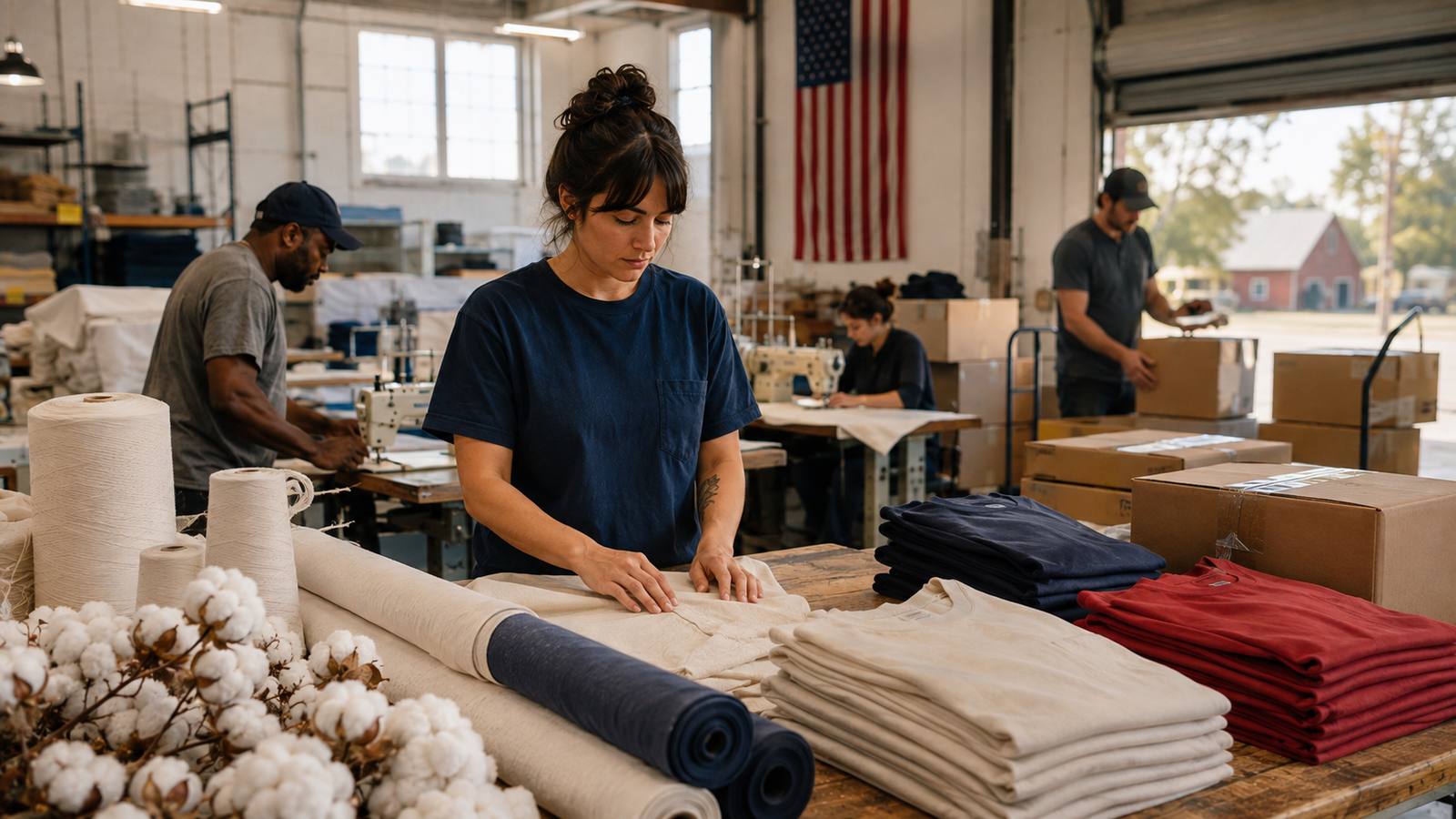
Fiber becomes yarn. Yarn becomes fabric. Fabric is dyed and finished. Pattern pieces are cut. A sewing team turns those pieces into a garment. The shirt is inspected, decorated, packed, and shipped.
For most apparel sold in the United States, those steps can cross multiple borders.
Bayside and US Blanks offer a different model.
Bayside and vertical production
Bayside describes itself as a large vertically integrated U.S. apparel manufacturer. According to the company, it knits, dyes, finishes, cuts, and sews its garments in-house in the United States.
The company has been producing American-made apparel since the 1990s and markets many of its shirts under the “True American Made Tee” identity.
Its product specifications are also useful because they show why details matter. Bayside’s midweight and heavyweight crews list fabric weight, construction, available sizes, and fiber content. Some Dark Ash variants include polyester even when other colors are all cotton.
That kind of specificity is what a retailer should carry through to the customer.
US Blanks and local Los Angeles production
US Blanks says its collection is designed and crafted in America and describes local fabric production through a partner knit-and-dye facility. The company says much of its cutting and sewing happens in-house in Los Angeles.
It also publishes information about its workforce, facilities, and local production philosophy.
Again, the value is not that a company says “American” more often. The value is that the company describes processes a buyer can actually evaluate.
Why F2R uses established American blanks
Starting a clothing brand does not mean building a knitting mill.
The practical path is to work with manufacturers that already know how to make a consistent garment at scale. By selecting U.S.-made blanks, F2R can focus on design, decoration, merchandising, and customer experience while keeping the garment itself connected to domestic production.
That is a better use of a small brand’s resources than pretending to manufacture capabilities it does not have.
Supplier transparency should stay visible
As F2R grows, product pages should identify the blank style and meaningful construction details whenever possible.
Customers who care about origin should not have to take our word for it. They should be able to inspect the supplier, read the specifications, and understand why a particular shirt was chosen.
That creates a useful chain of accountability:
manufacturer to F2R, F2R to customer.
Quick answer
Who makes F2R’s American-made blanks? Bayside is a core supplier, and US Blanks is another U.S. manufacturer relevant to the brand’s sourcing framework.
Are all colors always 100 percent cotton? No. Fiber content can vary by style and color, which is why product-level specifications matter.
Why use blanks instead of manufacturing shirts from scratch? Established domestic manufacturers already have the equipment, workforce, and quality systems needed to produce consistent garments at scale.
Sources
- USA Bayside: https:/
/ usabayside. com/ about/ - US Blanks: https:/
/ usblanks. net/ pages/ american- made - FTC Made in USA guidance: https:/
/ www. ftc. gov/ business- guidance/ resources/ complying- made- usa- standard