A T-shirt may look simple. The supply chain behind it is not.
When people picture American-made apparel, they often picture a sewing floor. Sewing matters, but it is only one stage in a much longer manufacturing chain. Before a shirt can be cut and stitched, somebody has to produce fiber, turn it into yarn, form fabric, dye and finish that fabric, and move it through several specialized businesses.
1. Fiber comes first
For a cotton shirt, the process begins with cotton production. U.S. cotton is mechanically harvested, transported to a gin, separated from seed, cleaned, compressed into bales, and classified for quality. USDA classing data helps manufacturers source cotton with the characteristics needed for particular end uses.
2. Fiber has to become yarn
Textile mills open and blend cotton, align the fibers, draw them into a more uniform strand, and spin them into yarn. Yarn count, twist, fiber length, and consistency all affect the fabric that comes later.
A shirt cut and sewn in the United States can still depend on imported yarn if domestic spinning capacity is not part of that product’s supply chain.
3. Yarn has to become fabric
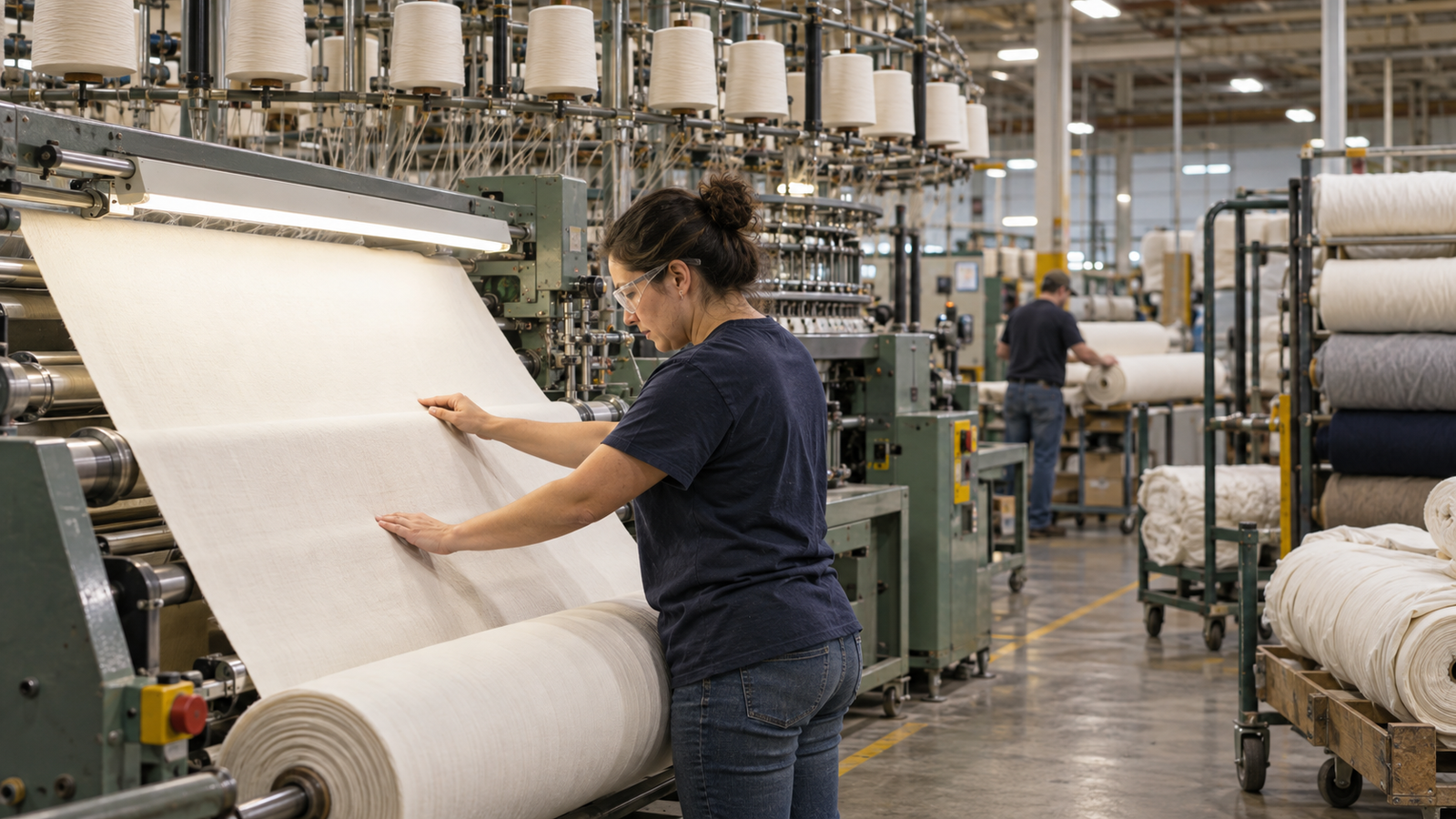
Most T-shirts use knitted fabric rather than woven fabric. Circular knitting machines can turn yarn into large tubes or rolls of jersey fabric. Other garments may use woven cloth, fleece, rib knit, or specialty constructions.
This stage requires machinery, maintenance, skilled technicians, quality control, and reliable yarn supply.
4. Fabric must be dyed and finished
Raw fabric usually is not ready to become a finished garment. Dyeing and finishing can include washing, bleaching, dye application, shrinkage control, softening, drying, heat setting, and other treatments depending on the material and desired performance.
This industrial middle is easy to overlook because consumers rarely see it.
5. Cutting converts fabric into garment pieces
Factories spread fabric in layers, position patterns or digital markers, and cut the body, sleeves, neck rib, and other components. Efficient cutting affects both labor and material yield.
6. Sewing assembles the garment
Only now does the familiar cut-and-sew stage begin. Different seams may be made on overlock, coverstitch, lockstitch, or other specialized machines. Operators join shoulders, sleeves, side seams, neckbands, and hems while maintaining size and appearance standards.
7. Decoration, finishing, and inspection still remain
Printing, embroidery, labels, pressing, folding, inspection, packaging, and final quality checks happen after basic assembly. A decorated shirt can therefore involve one more domestic operation even when the blank shirt itself was made elsewhere.
What the label actually tells you
Textile country-of-origin labeling has its own federal requirements. FTC guidance explains that textile products processed or manufactured partly in the United States and partly abroad must identify both domestic and foreign processing where required. Examples include wording such as “Made in U.S.A. of imported fabric” or “Fabric made in China, cut and sewn in U.S.A.”
That is why “printed in USA,” “designed in USA,” “cut and sewn in USA,” and “Made in USA” should not be treated as interchangeable claims.
Why rebuilding apparel capacity is hard
If domestic sewing returns but spinning, knitting, dyeing, finishing, machine maintenance, and supplier capacity do not, the supply chain is still incomplete.
Reshoring apparel therefore means rebuilding or expanding several linked capabilities at once. Each step has its own equipment, workforce, environmental requirements, production volumes, lead times, and economics.
The practical takeaway
American-made apparel takes more than sewing because a garment is the output of an industrial chain, not a single workstation.
When you want to understand where a shirt came from, ask where the fiber was grown, the yarn spun, the fabric made, the fabric dyed and finished, the garment cut and sewn, and the decoration applied. The more of that chain a company can document, the more useful its origin story becomes.
Sources
https://www.ers.usda.gov/topics/crops/cotton-and-wool/cotton-sector-at-a-glance
https://www.ams.usda.gov/services/grading/cotton-classing
https://www.ftc.gov/business-guidance/resources/threading-your-way-through-labeling-requirements-under-textile-wool-acts
https://www.ftc.gov/business-guidance/resources/complying-made-usa-standard