
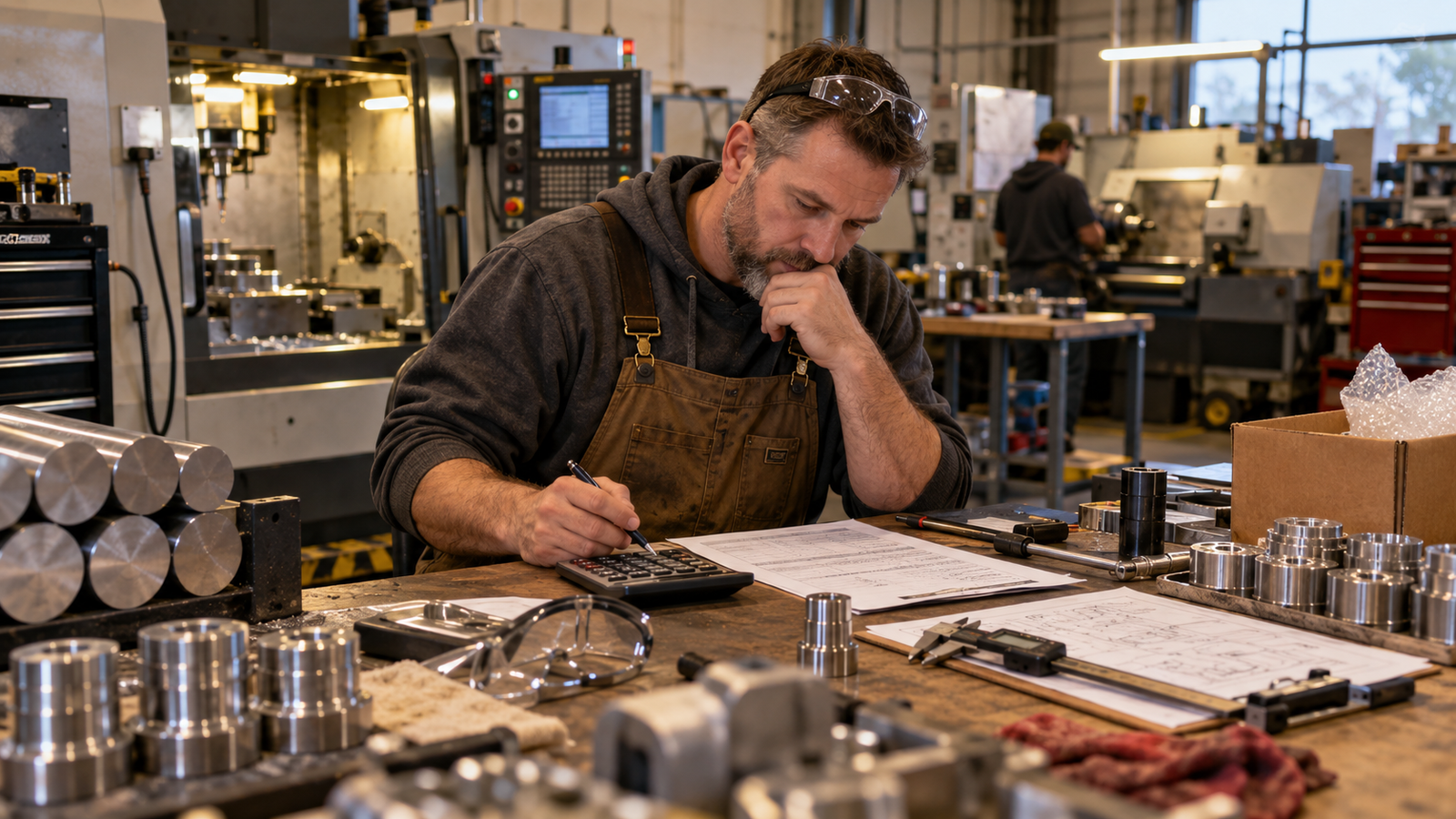
American-made products often cost more at checkout because domestic production carries real costs for labor, benefits, equipment, facilities, compliance, smaller production runs, and local supply chains. That does not mean every expensive American product is good or every imported product is bad. It means a fair comparison should look beyond the sticker price.
The short answer
Making something in the United States means paying for American production conditions. In March 2026, the U.S. Bureau of Labor Statistics reported that manufacturing employers averaged $32.20 per hour in wages and salaries plus $16.07 per hour in benefits. That is about $48.27 in employer compensation per hour before adding the cost of the building, machinery, materials, utilities, supervision, quality control, insurance, financing, packaging, freight, sales, and profit.
A manufacturer does not put one worker’s hourly cost directly into one product. Production is more complicated than that. But the BLS number makes one thing clear: American labor is not free, and the price of an American-made product has to support the people doing the work.
Labor is only the beginning
When people hear “American-made costs more,” they often reduce the discussion to wages. Wages matter, but they are only one line in the cost structure.
A domestic manufacturer may have to pay for:
Skilled production labor
Health and retirement benefits
Workers’ compensation and payroll taxes
Industrial rent or property costs
Machinery and maintenance
Energy
Quality systems
Environmental and safety compliance
Domestic freight
Tooling
Engineering
Inventory
Customer service
Returns and warranty support
Small companies carry many of these costs with less volume to spread them across.
That last point matters. A global factory producing hundreds of thousands of units can often buy materials more cheaply, run specialized equipment continuously, and spread fixed costs across a huge production base. A small American maker producing hundreds or thousands of units may not have that scale.
Smaller runs can be better, but they are rarely cheaper
Small-batch production can offer advantages. A company can change a design faster, inspect products closely, respond to customer feedback, and avoid holding a mountain of inventory.
But a short production run also means more setup cost per unit.
Imagine a machine requires two hours to set up whether the run is 200 pieces or 20,000 pieces. The setup time is spread across far fewer products in the small run. The same logic applies to cutting patterns, printing screens, quality checks, packaging setup, and purchasing.
This is one reason American small businesses can make excellent goods without winning a race to the lowest possible price.
Domestic inputs can cost more too
If the manufacturer is trying to source American steel, fabric, leather, hardware, packaging, or components, those inputs may carry the same domestic cost structure.
That means “Made in USA” can stack domestic value through several layers.
An American cut-and-sew shop buying American fabric from an American mill is supporting more domestic work than a shop using imported fabric. That deeper chain can also increase cost.
The consumer gets to decide whether that added domestic content matters enough to justify the price. F2R’s job is not to guilt anyone into a purchase. Our job is to make the tradeoff visible.
Price and value are not the same thing
A low purchase price can be a good deal. It can also be a bad deal if the product fails quickly, cannot be repaired, fits poorly, or has to be replaced repeatedly.
The better question is often cost per year of useful life.
A $30 product that lasts one year costs $30 per year. A $90 product that lasts six years costs $15 per year. That simple example does not prove the more expensive product will last longer, but it shows why durability changes the math.
The same thinking applies to boots, tools, cookware, furniture, clothing, outdoor gear, and household equipment.
Before paying a premium, look for evidence:
Better materials
Repairable construction
Replaceable wear parts
Strong warranty support
Visible quality control
A long record of making the same product
Clear sourcing
Customer reports from years of use, not just first impressions
“American-made” should not be a magic word that excuses poor quality.
When an imported product may be the practical choice
Sometimes the imported option is the right option.
Maybe there is no meaningful domestic alternative. Maybe the American-made version is outside your budget. Maybe the product is a low-use item where paying three times more would not improve your life. Maybe the foreign-made product is genuinely excellent.
Practical patriotism is not a contest to see who can spend the most money.
A realistic strategy is to prioritize the categories where domestic sourcing matters most to you. You might focus on workwear, tools, food, household staples, gifts, or products you replace often. Someone else might focus on furniture, boots, kitchenware, or small businesses in their own town.
Moving part of your spending is still moving spending.
Why stable demand matters
Manufacturers invest when they believe demand will be there long enough to justify machines, hiring, training, and supplier commitments.
That is another reason buying American cannot be reduced to a one-day slogan. A domestic factory cannot responsibly expand because customers became enthusiastic for a weekend. It needs a market it can plan around.
Consistent demand gives manufacturers more confidence to invest in capacity and gives suppliers more reason to support domestic production.
This is slower than a viral campaign. It is also how real businesses work.
What are you actually paying for?
When you buy an American-made product, the premium may support some combination of:
Domestic labor
Domestic material processing
Local taxes and services
Shorter or more visible supply chains
Small business margins
Skilled trades
Quality control closer to the customer
Faster restocking
More direct accountability
None of those benefits guarantees the product is worth buying. They are reasons to evaluate the product on more than price alone.
Related questions
Are American-made products always higher quality?
No. Origin and quality are different questions. A bad product can be made anywhere. Look at materials, construction, repairability, warranty, and actual performance.
Why can large imported brands sell so cheaply?
Scale, supply-chain specialization, labor costs, currency, automation, material purchasing power, and large production runs can all affect price.
Is buying American always the financially smart choice?
No. The right choice depends on budget, use, product life, available alternatives, and what you value.
What should I read next?
See our guide to how to verify a Made in USA claim, and our repairability checklist for deciding whether a higher-priced product is likely to stay useful.
F2R takeaway: a price tag tells you what the store charges today. Value tells you what the product, the work, and the useful life are worth over time.