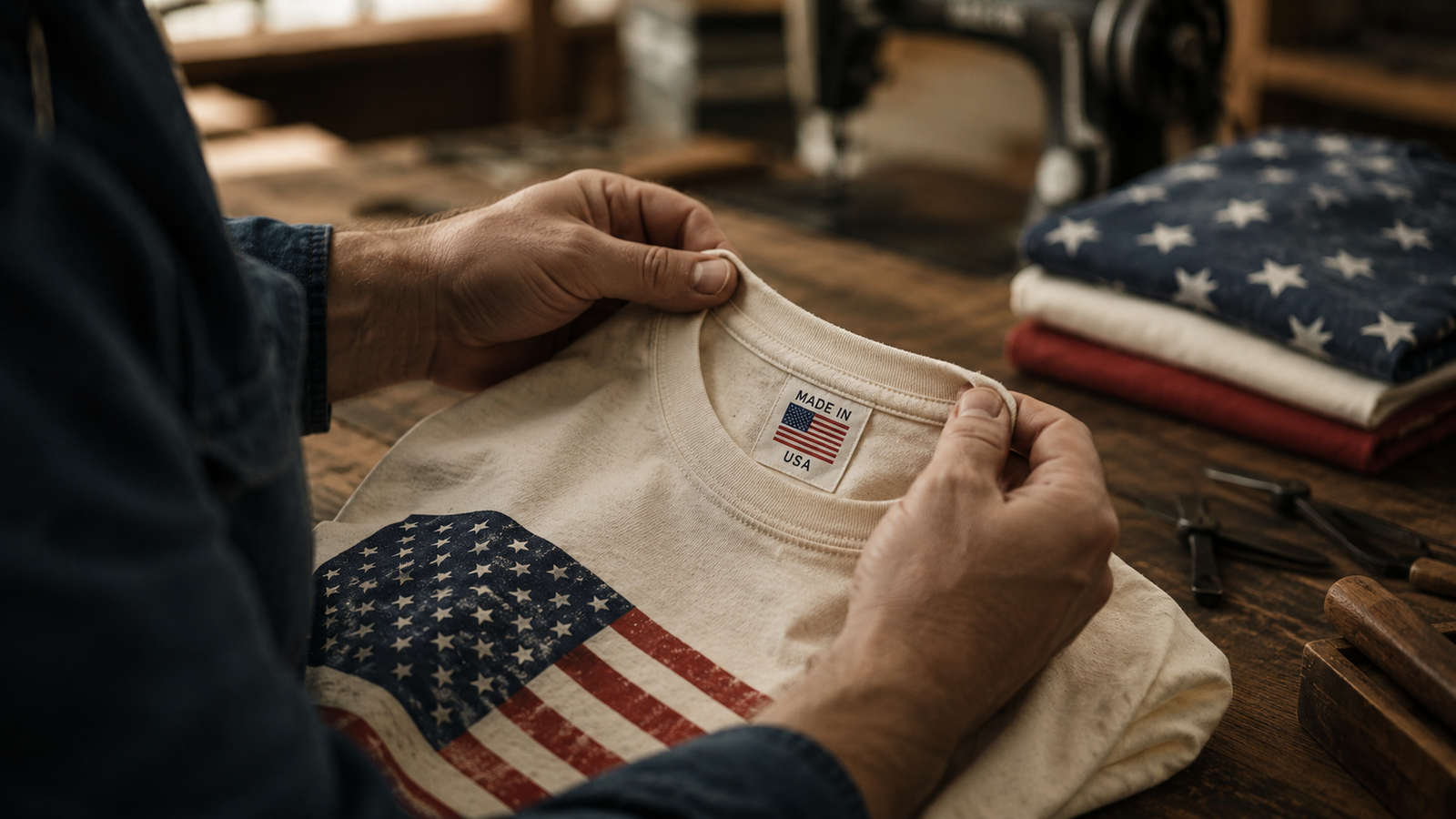
“Made in America” should mean more than a flag on the package. In the United States, it actually has a legal standard behind it. The Federal Trade Commission says an unqualified Made in USA claim should mean a product is “all or virtually all” made here, with final assembly and significant processing taking place in the United States.
That matters because origin is not just a marketing detail. It tells you something about the people, rules, supply chain, and productive capacity behind a product.
American manufacturing is still a big part of American life
Manufacturing did not disappear. The Bureau of Labor Statistics reports that more than 12.8 million people worked in manufacturing in 2024, and it projects nearly one million openings in production occupations each year, on average, through 2034. Some of those openings come from growth, while many come from workers retiring or moving into other fields.
That is a reminder that making things is not a chapter from a history book. It is current work performed by current American families.
Domestic production also means a more visible supply chain
A long international supply chain is not automatically bad, and a domestic supply chain is not automatically perfect. But producing closer to home can make sourcing easier to understand and risks easier to manage. NIST’s Manufacturing Extension Partnership specifically points to supply-chain mapping, domestic supplier scouting, reshoring, and diversification as ways manufacturers can reduce uncertainty.
For apparel, the chain can begin even earlier than most people realize. USDA tracks a major U.S. cotton industry that connects farms, gins, mills, trade, and textile production. American-grown cotton is not a slogan. It is an actual agricultural sector with real people and infrastructure behind it.
The label should be earned
This is where F2R draws a hard line. Patriotic graphics on an imported shirt are easy. Building a product around American-made blanks, American labor, and a domestic production story is harder.
Harder is the point.
When a company claims Made in America, buyers should be able to ask basic questions: Where was the garment cut and sewn? Where was the fabric made? What does the manufacturer itself say about origin? Is the claim qualified, or is it an unqualified Made in USA claim?
The FTC requires businesses to have a reasonable basis for those claims. Consumers should expect the same level of seriousness.
Why it still matters
Buying American will not solve every economic problem. It will not reopen every factory by itself. But purchases do help determine which supply chains survive, which suppliers receive orders, and which kinds of production remain commercially viable.
That is enough reason to pay attention.
At Flight to the Right, Made in America is not decoration on the brand. It is part of the product decision itself. The shirt should support the message printed on it.
Quick answer
What does Made in USA mean? For an unqualified claim, the FTC says the product should be all or virtually all made in the United States.
Does buying American matter? One purchase is small, but demand supports domestic suppliers, workers, and the production systems that make future purchases possible.
Is every patriotic shirt American-made? No. A patriotic design and a domestic-origin claim are two completely different things.
Sources
- Federal Trade Commission: https:/
/ www. ftc. gov/ business- guidance/ resources/ complying- made- usa- standard - U.S. Bureau of Labor Statistics: https:/
/ www. bls. gov/ careeroutlook/ 2026/ article/ manufacturing. htm - NIST Manufacturing Extension Partnership: https:/
/ www. nist. gov/ mep/ supply- chain - USDA Economic Research Service: https:/
/ www. ers. usda. gov/ topics/ crops/ cotton- and- wool/ cotton- sector- at- a- glance