Repair makes sense when the item is safe to fix, the repair cost is reasonable compared with replacement, the repaired product still meets your needs, and parts or skilled service are available. The bigger idea is even simpler: products designed to be maintained give owners more control over what they buy.
The short answer
Not everything should be repaired forever. Some products become unsafe, inefficient, obsolete, or uneconomical to fix. But the opposite habit is expensive too: replacing useful things because one small part failed.
Repair culture lives in the middle.
It asks whether a product was built so normal wear can be addressed without throwing away the whole item.
That question matters before you buy, not only after something breaks.
Repairability starts with design
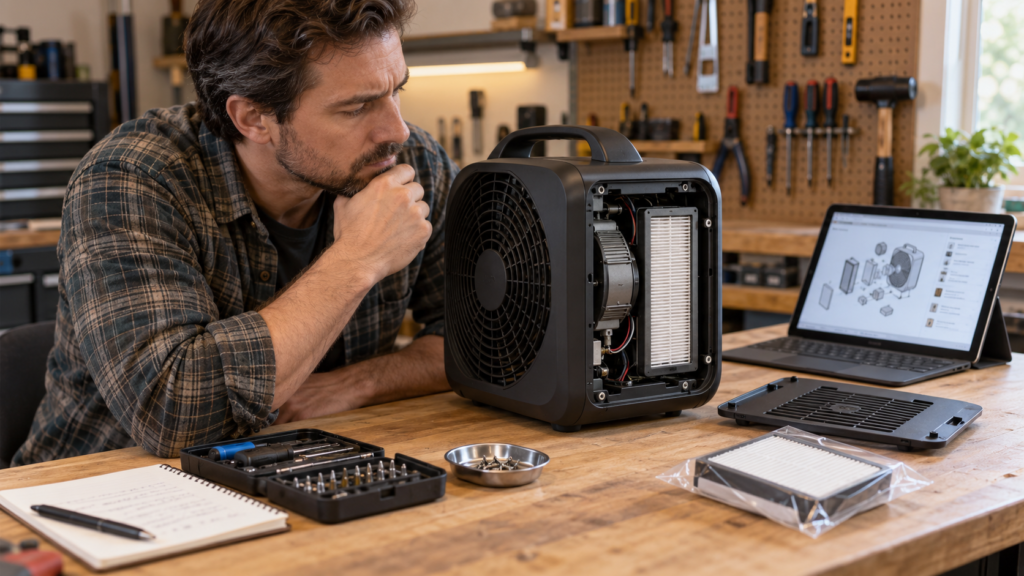
A repairable product usually gives you some way to reach the part that wears out.
Look for features such as:
Screws instead of permanent glue where service is expected
Standard fasteners
Replaceable blades, belts, cords, seals, batteries, filters, wheels, handles, or switches
Available parts diagrams
Published model numbers
Service manuals or clear instructions
Parts sold for more than the first year
Construction that can be opened and reassembled
Materials that tolerate normal maintenance
A service network or an active independent repair community
No single feature guarantees a good product. Together, they tell you whether the manufacturer expects the item to have a life after the warranty.
The cheapest part can kill the whole product
Many products fail because of a small wear component.
A cracked knob can sideline an appliance.
A worn bearing can make a machine howl.
A damaged zipper can make a good jacket feel finished.
A broken handle can retire cookware that still has decades of life.
A battery can turn an otherwise functional device into a drawer ornament.
When the wear part is replaceable, the owner has options. When it is permanently bonded, proprietary, unavailable, or deliberately inaccessible, the whole product may become disposable.
That is why repairability belongs in a value calculation.
Use a repair threshold
There is no universal percentage that decides whether a repair is worthwhile, but you can use a simple framework.
Ask five questions:
Is the item safe after repair?
What does the repair cost compared with a replacement of similar quality?
How much useful life is likely to remain?
Can the item still do the job you need?
Would replacement provide a meaningful improvement in efficiency, safety, or function?
A $75 repair on a well-built $500 tool may be easy to justify. A $200 repair on a worn-out $250 appliance may not be.
The original purchase price is not the only comparison. Compare the repair with the cost of the replacement you would actually buy.
Safety comes first
Self-reliance does not mean pretending every job is a do-it-yourself job.
Electrical systems, gas appliances, pressure vessels, structural components, vehicle safety systems, and other high-risk repairs can require trained professionals.
Knowing when to call someone skilled is part of being competent.
The goal is not to prove you can fix everything. The goal is to keep useful things useful without creating a bigger problem.
Repair skills create independence
Basic maintenance changes the relationship between an owner and a product.
You start noticing fasteners, materials, wear points, lubricants, alignment, and replacement parts. You become less dependent on the assumption that every failure requires a new purchase.
That might mean learning to:
Sew on a button
Patch work clothes
Sharpen a blade
Replace a tool cord
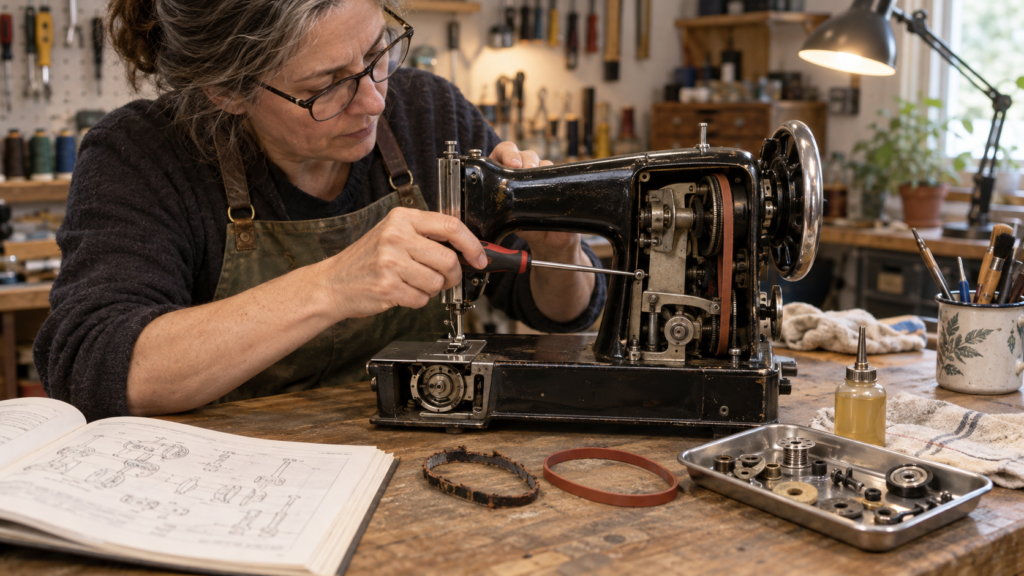
Change a belt
Clean a filter
Repack a bearing
Refinish wood
Replace a faucet cartridge
Maintain boots
Those are small skills. Over years, they save money and build confidence.
They also create respect for the people whose repair skills go far beyond the basics.
Repairability supports skilled local work
A repairable product creates work for technicians, cobblers, machinists, tailors, mechanics, electricians, appliance repair shops, small engine shops, and specialty rebuilders.
Disposable design cuts those people out of the chain.
This is one reason repair culture fits F2R’s view of American craftsmanship. A strong local economy is not only factories making new things. It is also people maintaining, modifying, restoring, and extending the life of what already exists.
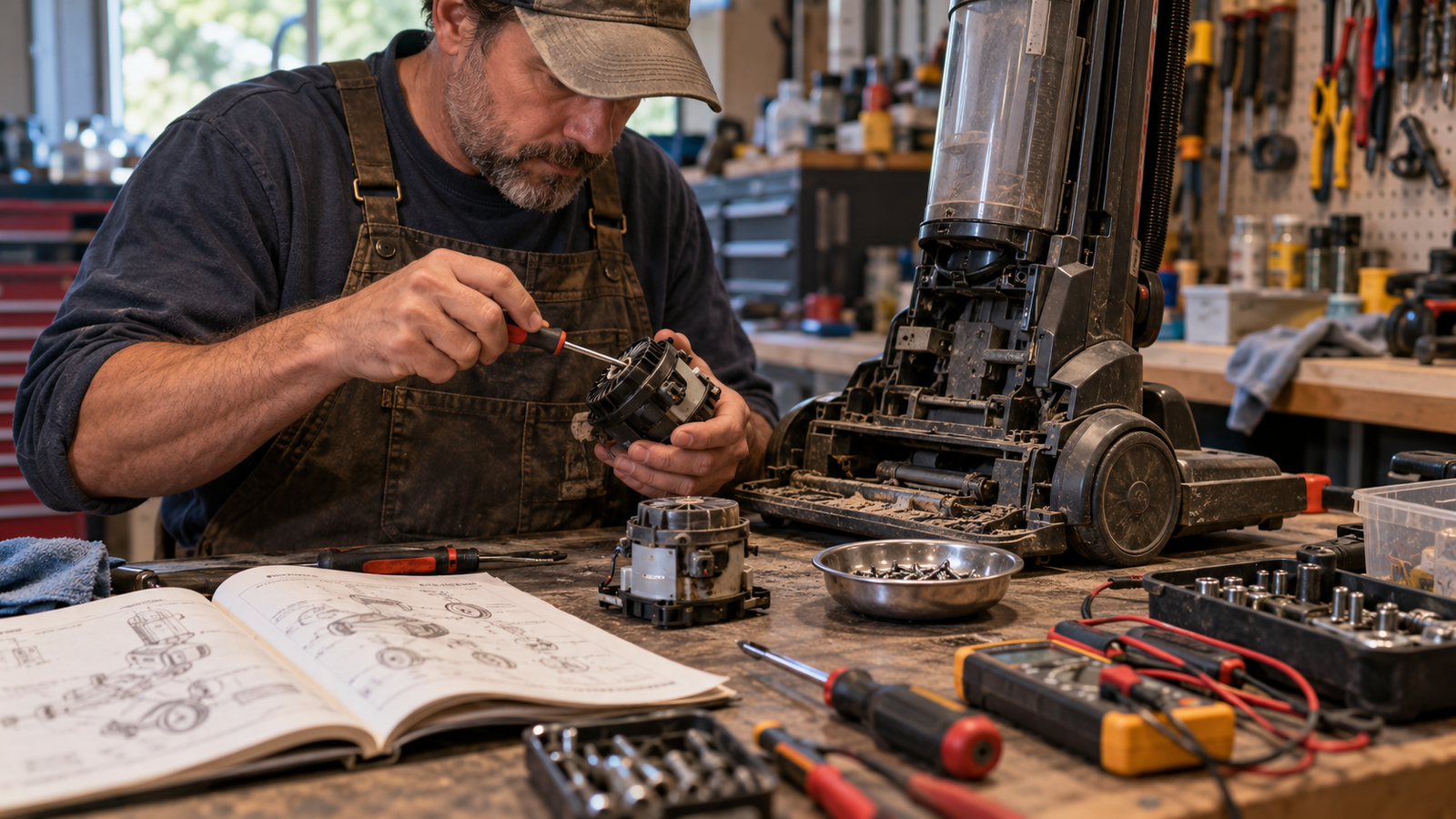
The person who rebuilds a motor or resole a pair of boots is part of the productive economy too.
Right to repair is part of the broader conversation
The Federal Trade Commission has examined repair restrictions and the ways manufacturers can limit independent or owner repair. The legal and policy details vary by product and jurisdiction, but the consumer issue is straightforward: can the owner reasonably maintain the product after purchase?
F2R does not need every repair question to become a political fight.
We care about practical ownership.
If you paid for the product, you should understand what happens when a normal part wears out. Can you get the part? Can a qualified independent shop work on it? Is useful information available? Does opening the product create unnecessary barriers?
Those questions belong on the shopping list.
When replacement is the smarter choice
Repair culture is not repair worship.
Replace the item when:
The repair would leave a safety concern
Critical parts are no longer trustworthy
The product wastes enough energy or resources that replacement has a clear benefit
The repair cost approaches or exceeds a comparable replacement with better expected life
The item no longer meets the job
Repeated failures show that you are maintaining a bad design
There is no virtue in pouring money into a machine that has already told you what it is.
The goal is useful life, not stubbornness.
Build a repairability habit before buying
Before a major purchase, spend five minutes searching:
“[model] replacement parts”
“[model] service manual”
“[model] common failure”
“[model] battery replacement”
“[model] repair”
You can learn a lot from what appears.
If parts diagrams, manuals, independent shops, and years of replacement components show up, that is encouraging.
If every search result is a frustrated owner discovering that one sealed component makes the product disposable, that is information too.
Related questions
Is a repairable product always more expensive?
No. Some affordable products use standard parts and simple construction. Some expensive products are difficult to repair.
Is buying used part of repair culture?
Absolutely. A well-built used product with parts support can be a better value than a new disposable product.
Should I repair everything myself?
No. Do what you can do safely and competently, and pay skilled people for the rest.
What should I read next?
See our guide to the buy-it-for-life mindset and our upcoming repairability checklist for what to inspect before spending more on a product.
F2R takeaway: ownership is better when a worn part does not get the final vote.