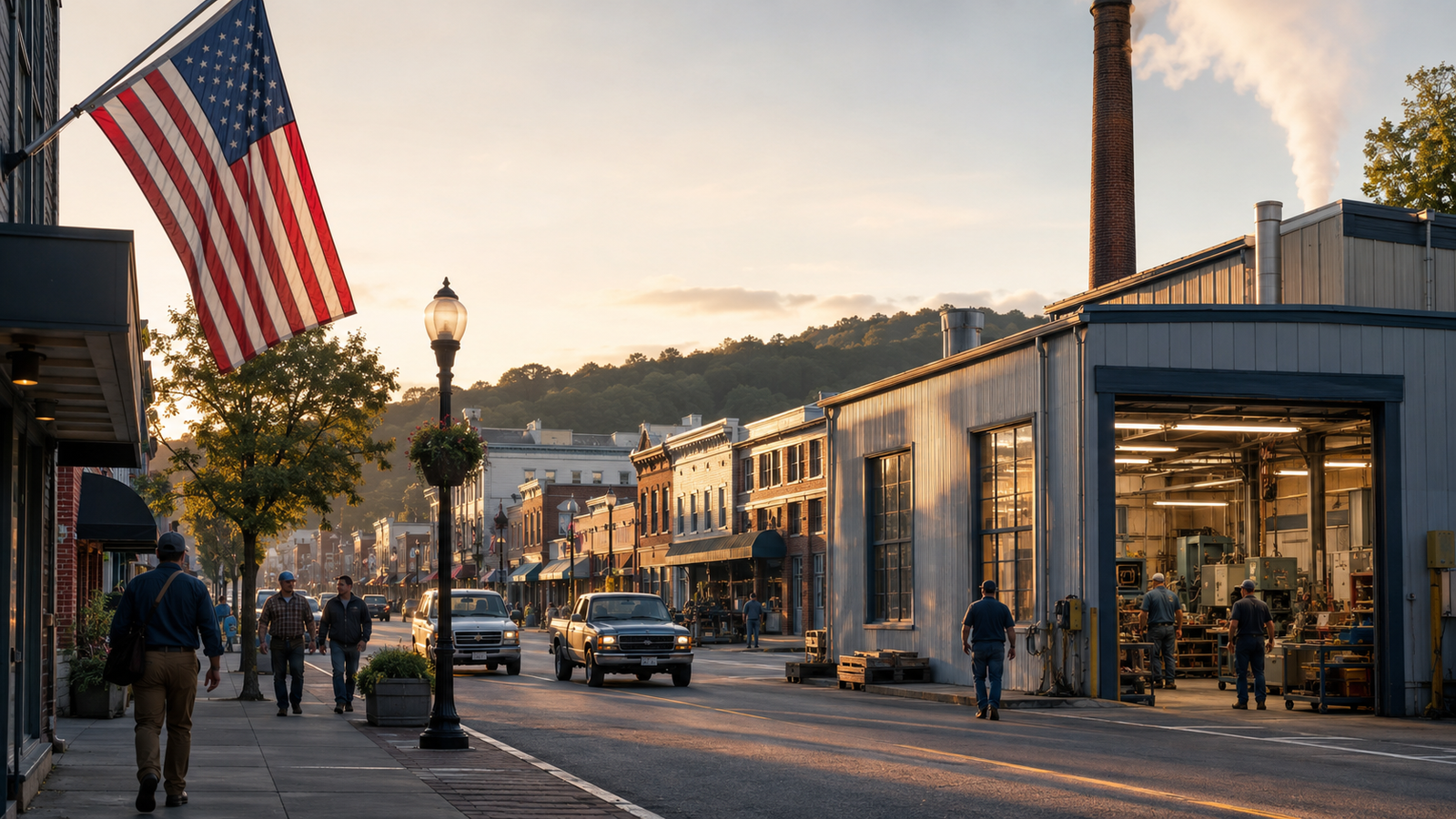
There is a familiar American picture: an old brick factory on the edge of town, loading doors closed, parking lot cracked, the company name still faintly visible over the entrance.
It is easy to turn that image into nostalgia. The more useful question is what manufacturing still means now.
Millions of Americans still make things for a living
The Bureau of Labor Statistics reports that more than 12.8 million people worked in U.S. manufacturing in 2024. BLS expects the total to be relatively stable over the next decade, but it also projects nearly one million openings in production occupations each year on average, mostly because workers retire, transfer, or otherwise leave their occupations.
That creates a strange reality. The country can debate whether manufacturing is “coming back” while manufacturers simultaneously need machinists, operators, maintenance workers, technicians, supervisors, engineers, and people who know how to keep a production line moving.
A factory is more than the people inside it
Manufacturing supports suppliers, maintenance companies, freight, packaging, utilities, construction, accounting, local restaurants, and the businesses where workers spend their paychecks.
That does not mean every factory automatically transforms a town. It means productive businesses tend to sit inside networks. When a major employer disappears, the effect can spread beyond the building itself.
The same is true when production grows.
NIST’s Manufacturing Extension Partnership works specifically with small and midsize manufacturers on supplier scouting, process improvement, reshoring, and supply-chain resilience. That work exists because domestic manufacturing is an ecosystem. One company often depends on dozens of others.
The trades are part of the story
For years, young Americans heard a narrow message: four-year college was the respectable path, and work with tools was something to escape.
That was always too simple.
Modern manufacturing includes skilled trades and technical careers that demand judgment, precision, problem solving, and continuous learning. Some require apprenticeships or technical education. Others require engineering degrees. A healthy industrial base needs all of them.
The goal should not be to romanticize every factory job. It should be to respect productive skill and stop treating people who build, repair, cut, sew, weld, machine, inspect, and maintain as background characters in the economy.
Why this belongs on an apparel site
Because apparel is manufacturing too.
A T-shirt begins long before it reaches a printing press. Cotton is grown and processed. Yarn becomes fabric. Fabric is dyed and finished. Pieces are cut, sewn, inspected, decorated, packed, and shipped.
When F2R chooses an American-made blank, it is choosing to participate in that chain rather than merely talking about it.
That is a small choice in a huge economy. But brands are built from repeated small choices.
Quick answer
Is American manufacturing still significant? Yes. BLS reports millions of U.S. manufacturing workers and substantial annual openings in production occupations.
Why do factories matter to communities? They can support networks of suppliers, service firms, freight, and household spending beyond the factory itself.
What does F2R have to do with it? Apparel has its own manufacturing chain, and sourcing domestically places more of that chain inside the United States.
Sources
- U.S. Bureau of Labor Statistics: https:/
/ www. bls. gov/ careeroutlook/ 2026/ article/ manufacturing. htm - NIST Manufacturing Extension Partnership: https:/
/ www. nist. gov/ mep/ supply- chain