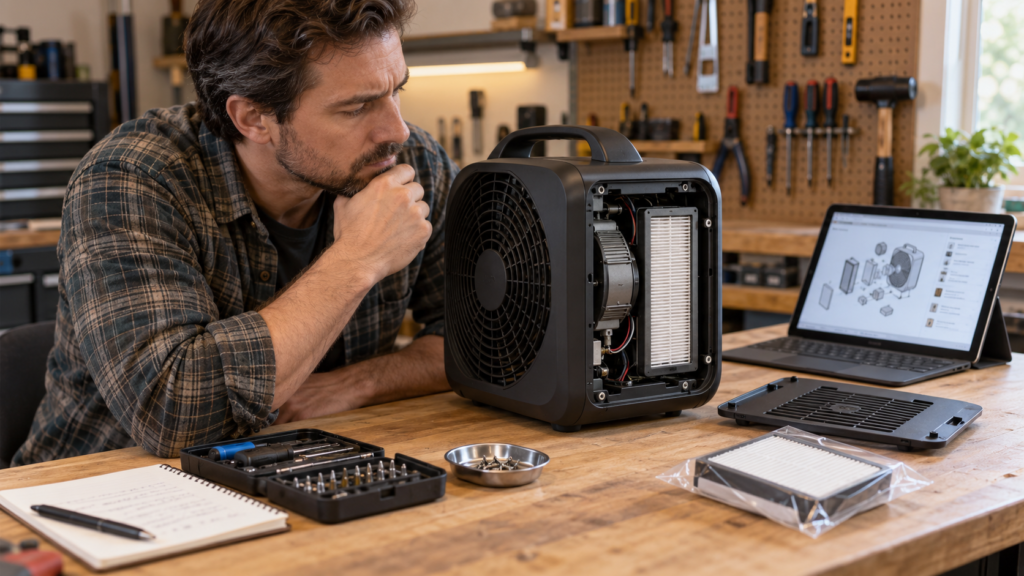
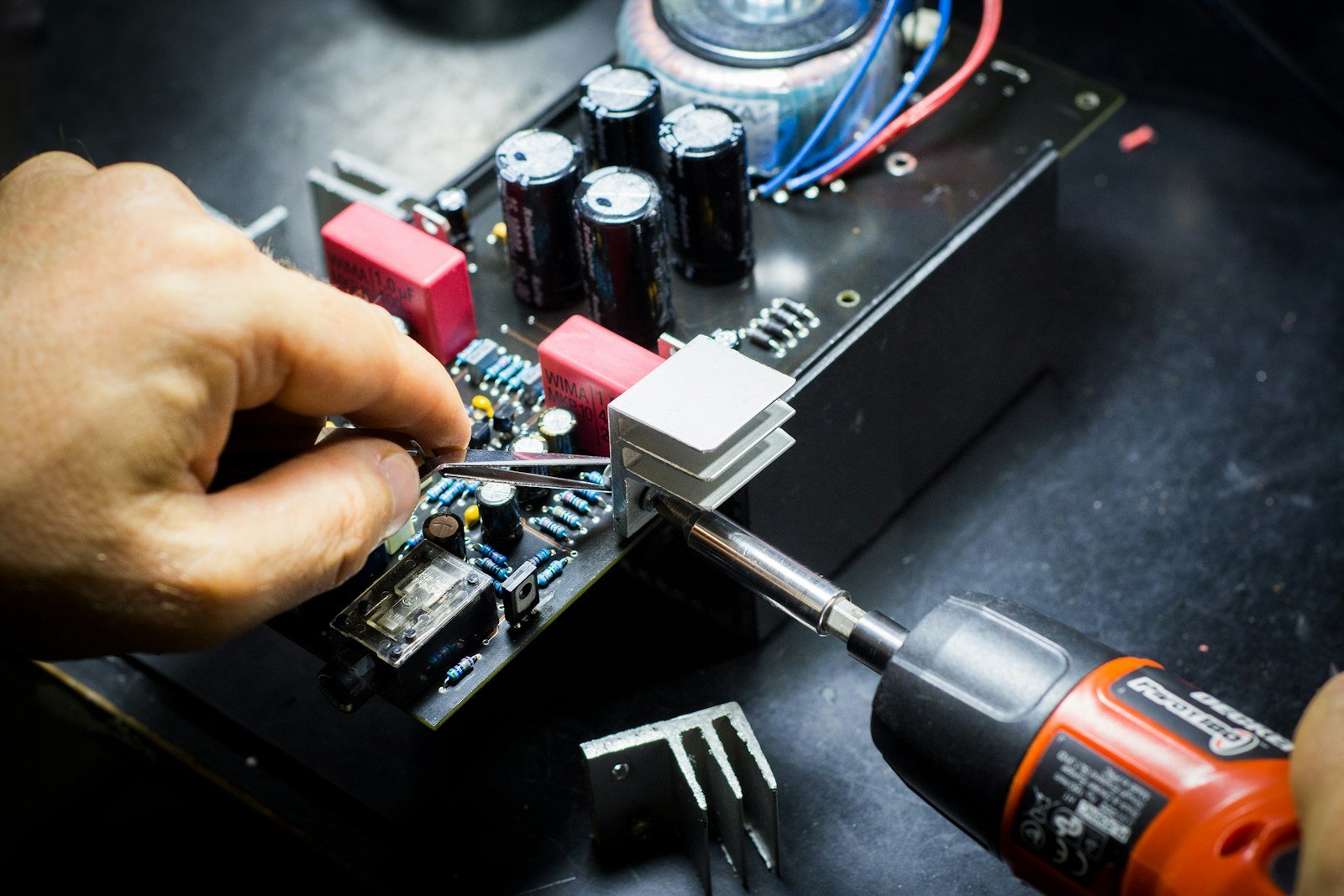
Short answer: A repairable product gives you reasonable access to the parts, fasteners, information, tools, and software needed to diagnose a problem and replace what failed. Repairability is not one feature. It is the result of several design and support decisions working together.
The best time to ask whether something can be repaired is before it breaks.
1. Can you get inside it without destroying it?
Start with the enclosure.
Products held together with ordinary screws, bolts, clips, or serviceable fasteners are usually easier to open and close than products that rely heavily on permanent adhesives, welded plastic, or one-time-use tabs.
The Federal Trade Commission has specifically identified physical design choices, including adhesives and proprietary tools, as potential barriers to independent repair.
That does not mean every screw is good and every adhesive is bad. Sealing may be needed for water resistance, safety, contamination control, or structural reasons. The useful question is whether normal service can happen without destroying the product.
2. Are replacement parts actually available?
A replaceable part is not much help if nobody will sell it to you.
Check whether the manufacturer or authorized parts distributors sell common wear items and failure parts such as:
- Batteries
- Belts
- Bearings
- Switches
- Filters
- Seals and gaskets
- Cords and connectors
- Motors or pumps
- Blades and other consumables
The FTC’s repair report noted that limited access to spare parts can force consumers to replace otherwise useful products.
3. Does the product have a real model number?
A clear model number is one of the simplest repair clues.
It gives you something specific to search when you need a manual, exploded parts diagram, technical bulletin, replacement component, or compatible accessory.
A product that changes frequently without clear model identification can make even simple parts matching harder.
4. Are service manuals or parts diagrams available?
Good documentation reduces guesswork.
Look for an owner’s manual that goes beyond basic setup. Better yet, look for service information, troubleshooting steps, wiring diagrams where appropriate, exploded parts drawings, error-code explanations, or parts lists.
The FTC has identified the unavailability of manuals, diagnostic software, and tools as a repair restriction because missing information can make otherwise possible repairs difficult or impossible.
5. Are the fasteners ordinary?
A product does not have to use one screw type everywhere, but repair gets easier when common tools can handle normal service.
Standard Phillips, Torx, hex, slotted, or socket-head fasteners are generally easier to support than proprietary heads that require a tool sold only to authorized service centers.
Special fasteners may be justified for tamper resistance or safety. The question is whether they are being used where they protect something important or simply where they make access harder.
6. Are wear items separate from the whole assembly?
Good repairable design often lets the failed part be replaced without throwing away the parts around it.
A worn bearing should not always require a new motor. A damaged cord should not require a new appliance. A depleted battery should not necessarily retire an otherwise functional device.
Modularity is not free. Connectors, housings, fasteners, inventory, and service documentation all cost money. But those design choices can extend useful life substantially.
7. Does software allow the repair to work?
Modern repairability is not purely mechanical.
Some products require diagnostic software, pairing procedures, calibration, firmware access, or electronic authorization after a component is replaced. A mechanically replaceable part can still be functionally locked out by software.
The FTC and Department of Justice have both raised concerns about software and technological protection measures when they block legitimate repair or maintenance.
8. Is there more than one repair path?
Repair is easier when you have choices.
Those choices might include:
- Manufacturer service
- Authorized service centers
- Independent repair shops
- Parts sold directly to owners
- Documented do-it-yourself maintenance
No single route is right for every product. High-voltage equipment, gas appliances, medical devices, or safety-critical machinery can require specialized service. But a durable consumer product should not become disposable simply because one service channel disappears.
9. What does the warranty actually say?
Do not assume that using an independent shop automatically voids a warranty.
The FTC has repeatedly challenged warranty language that improperly conditions coverage on the use of specified branded parts or service providers. Warranty coverage can still depend on whether a repair actually caused the later problem, but blanket “you opened it, so the warranty is gone” language can raise legal issues.
A quick repairability checklist before you buy
- Clear model number
- Accessible fasteners
- Replaceable common wear items
- Parts sold for several years
- Manuals and troubleshooting information
- Service diagrams or parts lists
- No unnecessary proprietary tools
- No obvious software lockout for normal repairs
- More than one service option
- Warranty terms that do not punish legitimate independent repair
The practical takeaway
Repairability is not about turning every owner into a technician.
It is about keeping a failed component from automatically becoming a failed product.
A well-supported product gives owners and repair professionals a realistic path to diagnose the problem, obtain the right part, perform the work safely, and put the product back into service.
That is worth checking before the purchase, not after the first failure.
Related reading: Repair Culture: When Fixing Beats Replacing.
Sources
https://www.ftc.gov/reports/nixing-fix-ftc-report-congress-repair-restrictions
https://consumer.ftc.gov/consumer-alerts/2021/05/ftc-weighs-repair-restrictions
https://www.ftc.gov/news-events/news/press-releases/2024/07/ftc-warns-companies-stop-warranty-practices-harm-consumers-right-repair